
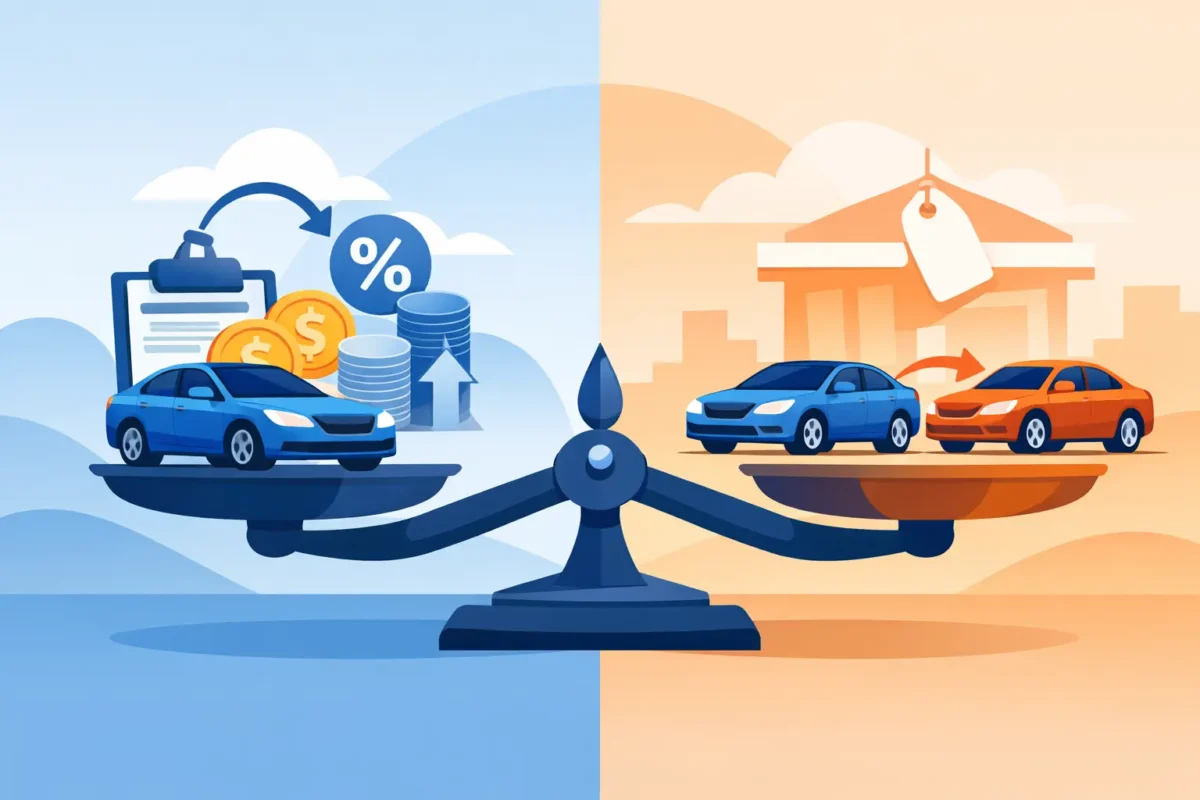
Your car payment feels too high, your interest rate isn’t great, and now you’re stuck between two very different options: keep the car and change the loan, or replace the car altogether. That is the real question behind auto refinance vs trade in, and the right answer usually comes down to one thing – which move improves your finances without creating new problems.
For many drivers, the comparison starts with monthly payment relief. But a lower payment by itself does not always mean you are spending less overall. Sometimes refinancing cuts your rate and payment while keeping you in a car you already know. Other times, trading in helps you move into a better-fit vehicle, but only if the numbers work and you are not rolling debt into a brand-new loan.
Auto refinance vs trade in: the basic difference
Auto refinancing means replacing your current car loan with a new one, usually to get a lower rate, a lower monthly payment, a different loan term, or a combination of all three. You keep the same vehicle. What changes is the financing.
Trading in means giving your current vehicle to a dealership as part of another purchase. The dealer applies your car’s trade-in value toward the next vehicle, and you either take out a new loan or sign a new lease. What changes is both the car and the financing.
That difference matters more than it first appears. Refinancing is mostly a financing decision. Trading in is a vehicle decision plus a financing decision. If your car still fits your life and is in decent shape, refinancing is often the cleaner move. If the vehicle itself no longer works for your needs, then trade-in becomes part of a bigger decision.
When refinancing usually makes more sense
If your main goal is lowering your monthly payment, refinancing is often the first option worth checking. It can reduce pressure on your budget without forcing you to shop for another car, negotiate a purchase price, or absorb the early depreciation that comes with a replacement vehicle.
Refinancing can make sense if interest rates have improved since you took out your loan, your credit profile has gotten stronger, or you originally financed at a high rate because you needed a fast approval. Even a modest rate drop can lead to real savings over time. In some cases, extending the loan term can also lower the payment, though that may increase total interest paid if the rate does not improve enough.
This option tends to work best when you like your current car, the vehicle is reliable, and you are not badly upside down on the loan. It is especially appealing for drivers who want fast financial relief without disrupting the rest of their routine.
A refinance can also be simpler than many people expect. With a lender focused on auto refinancing, the process is designed around speed and convenience, which matters if you are trying to improve cash flow now rather than weeks from now.
The biggest advantages of refinancing
The strongest reason to refinance is that it can improve your loan terms without requiring you to give up your car. That means no shopping pressure, no emotional buying decisions, and no risk of moving into a more expensive vehicle just because the monthly number looks manageable.
It can also protect you from a common trap: solving a payment problem by taking on a longer and more expensive purchase. If your current vehicle still works, refinancing lets you address the financing issue directly.
There are trade-offs, though. If your car needs costly repairs soon, lowering your payment may not be enough to make the vehicle worth keeping. And if your loan balance is far higher than the vehicle’s value, refinancing options may be narrower depending on lender requirements.
When trading in may be the better move
Trading in can make sense when the problem is not just the loan. Maybe your vehicle has become unreliable, no longer fits your family, burns too much gas, or has repair costs that are starting to outpace its value. In those cases, replacing the car may be the more practical long-term decision.
A trade-in can also help if your current vehicle still has decent value and you want to apply that value toward something more affordable or more dependable. If you are moving from a costly SUV into a lower-priced sedan, for example, the trade-in may support a lower payment and a better ownership experience.
But this is where many borrowers get tripped up. Trading in does not erase the old loan. If you owe more than the car is worth, the negative equity often gets added to the next loan. That means you may start your next purchase already in debt beyond the new vehicle’s value.
That rollover can keep you stuck in a cycle. The payment may look okay on paper, but the total amount financed rises, and the next car can become harder to refinance or trade later. So while trading in can solve the wrong-car problem, it can also create a bigger financing problem if you are not careful.
The hidden cost of focusing only on monthly payment
Dealership deals are often built around one question: what payment do you want? That can feel helpful, but it does not always lead to the best outcome. A dealer can lower the monthly payment by stretching the term, changing the interest rate, or increasing the amount financed.
So if you are comparing auto refinance vs trade in, do not stop at the payment. Look at the full picture: interest rate, loan length, total cost, vehicle value, fees, and whether any old debt is being rolled into the new contract.
A lower payment tied to a more expensive vehicle is not necessarily a win. A lower payment tied to better loan terms on a car you already own often is.
Questions to ask before you choose
Start with the vehicle itself. If your car is dependable, fits your needs, and has years of useful life left, refinancing deserves a close look. If the car is becoming a money pit or no longer works for your household, trading in may be more reasonable.
Then look at your equity position. If you owe less than the car is worth, you have more flexibility. If you are upside down, refinancing may help you stabilize your payment without carrying negative equity into another loan.
Next, consider your credit and timing. If your credit has improved since your original loan, refinancing may unlock better terms than you had before. If your credit is still a challenge, a trade-in purchase may not automatically improve your financing either, especially if you are rolling over old debt.
Finally, think about your real goal. Are you trying to reduce monthly expenses quickly? Keep a car you already like? Escape high interest? Replace an unreliable vehicle? The clearer that answer is, the easier this decision becomes.
A practical way to decide
If the car is good and the loan is bad, refinance.
If the loan is manageable but the car is wrong for your life, consider a trade-in.
If both the car and the loan are causing stress, run the numbers carefully before making either move. In that situation, the cheapest monthly option is not always the strongest financial choice.
For many households, refinancing is the more efficient first step because it targets the cost problem without adding the risks that come with buying another vehicle. A straightforward online refinance quote can help you see whether lower payments or a better rate are realistic before you spend a weekend at dealerships.
That is one reason many drivers start with refinancing and only explore a trade-in if the car itself truly needs to go. A company like OpenRoad Lending is built around that kind of practical decision-making: helping borrowers check for savings quickly, with less friction and no need to overcomplicate the process.
Auto refinance vs trade in: which saves more?
If your current vehicle is solid, auto refinance vs trade in usually comes down in favor of refinancing. It gives you a chance to lower your payment or improve your rate while keeping the asset you already own. In many cases, that is the more direct path to saving money.
Trade-in can save more only when the replacement vehicle is genuinely less costly to own and finance, and when you are not burying old debt inside the next loan. That is a narrower window than many people expect.
The smartest next step is not guessing. It is comparing the real numbers based on your loan, your car, and your budget. When the goal is breathing room, the best option is the one that reduces financial strain without setting up your next problem. Sometimes that means a new set of keys. Often, it just means a better loan on the car you already trust.