
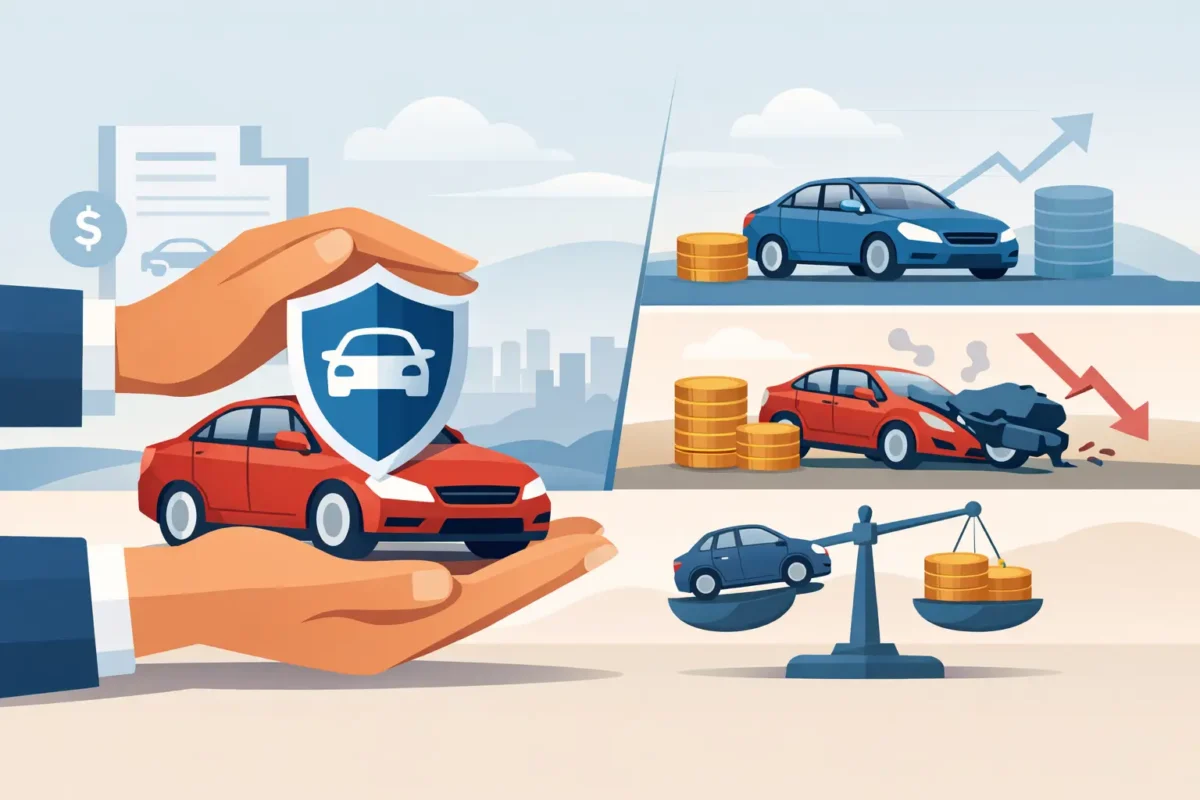
A serious accident can turn a reliable commute into a financial problem fast. If your vehicle is totaled or stolen, your auto insurer typically pays the car’s current market value, not necessarily the amount left on your loan. That difference is why many drivers ask, is GAP coverage worth it?
For borrowers who owe more than their vehicle is worth, GAP coverage can be a practical layer of protection. It may keep a total loss from leaving you with a loan payment for a car you can no longer drive. But it is not automatically the right choice for every vehicle owner. The value depends on your loan balance, your car’s value, your insurance policy, and how quickly you expect to pay down the loan.
What GAP Coverage Actually Does
GAP stands for Guaranteed Asset Protection. If your car is declared a total loss after a covered accident or theft, GAP coverage may help pay the difference between your insurance settlement and your remaining eligible loan balance.
Here is a simple example. Say you owe $25,000 on your auto loan, but your insurance company determines your totaled vehicle is worth $20,000. Without GAP, you could still be responsible for the $5,000 difference, plus any deductible that applies. With GAP coverage, the eligible gap may be covered based on the terms of your agreement.
That protection matters because vehicles can depreciate quickly, especially during the first few years of ownership. A standard auto insurance policy is designed to replace the vehicle based on its value at the time of the loss. It does not automatically erase the rest of your loan.
GAP coverage is not the same as full insurance. You still need comprehensive and collision coverage, and you still need to understand your policy deductible. GAP is designed to address a specific risk: being financially upside down after a covered total loss.
When Is GAP Coverage Worth It?
GAP coverage tends to make the most sense when the amount you owe is likely to stay higher than the value of your vehicle. That situation is often called being upside down or underwater on your loan.
You may want to strongly consider it if you made a small down payment, financed most or all of the vehicle price, selected a longer loan term, or rolled negative equity from a previous car loan into your new financing. These circumstances can create a larger gap between what you owe and what your car would be worth to an insurer.
It can also be a smart consideration if your monthly budget has little room for a surprise expense. Few people plan for a major accident or theft. If paying thousands of dollars on a vehicle you no longer own would put pressure on rent, groceries, savings, or other bills, GAP coverage can offer meaningful peace of mind.
Drivers of newer vehicles often have the most to gain. New cars commonly lose value faster early in ownership, while loan payments may reduce the principal balance more gradually. The result can be a period when a total loss settlement would not fully pay off the loan.
Situations Where the Protection Can Be Valuable
Consider a borrower who buys a $32,000 vehicle with a low down payment and chooses a 72-month loan to keep the payment manageable. A year later, the vehicle may be worth noticeably less than the remaining balance. If it is totaled, the borrower could face a substantial unpaid balance without GAP.
The same concern can apply when negative equity is carried over from a previous loan. If you owed money on your trade-in and that balance was added to the new loan, you may start out owing significantly more than the new vehicle is worth. GAP coverage may help protect against that early-loan exposure.
Leased vehicles are another common case. Many leases include GAP protection, but not all arrangements work the same way. Review your lease agreement rather than assuming you are covered.
When GAP Coverage May Not Be Necessary
GAP coverage is less likely to be worth the cost if you have substantial equity in your vehicle. For example, if you made a large down payment, bought a vehicle that has already depreciated significantly, or have paid down your loan quickly, your loan balance may be lower than the vehicle’s value.
It may also be less useful if you have enough savings to comfortably cover a potential shortfall. That does not mean you should automatically decline it. It simply means you have more flexibility to weigh the cost of coverage against the risk you are taking.
Before buying, check whether your auto insurance policy, lease, or existing protection plan already includes a similar benefit. Paying twice for overlapping coverage does not improve your protection. It only raises your costs.
Also pay attention to the details. GAP agreements may have limits, exclusions, and eligibility requirements. Some may not cover late fees, missed payments, extended warranty costs, prior loan balances, or your insurance deductible. Ask what is covered, what is excluded, and whether there is a maximum payout.
How to Tell if You Are Upside Down on Your Auto Loan
Start with two numbers: your current loan payoff amount and your vehicle’s estimated market value. Your lender can provide a payoff quote. For vehicle value, use a reputable valuation source and choose a realistic condition level, mileage range, and local market estimate.
If your payoff amount is higher than the estimated value, you may have a gap. Keep in mind that an insurance company’s actual total-loss settlement may differ from an online estimate. Still, this comparison gives you a useful starting point.
For example, if your payoff is $18,500 and your vehicle is worth around $16,000, you may be exposed to a $2,500 shortfall before considering your deductible. If that amount would be difficult to pay out of pocket, GAP coverage deserves a closer look.
Do this check periodically, especially after refinancing, making a large payment, or paying down your loan faster than scheduled. Your need for GAP can change as your balance falls.
How Refinancing Can Change the Picture
Refinancing your auto loan may help lower your interest rate, reduce your monthly payment, or give you terms that better fit your budget. It can also be a good time to review the protections connected to your vehicle financing.
A refinance does not automatically mean GAP coverage carries over. Coverage rules vary by provider and agreement, so confirm what happens to your existing plan before finalizing new financing. If you are considering GAP with a refinanced loan, compare the expected loan balance with your vehicle’s current value and review the agreement carefully.
A lower payment can create breathing room in your monthly budget, but extending a loan term may keep you upside down longer in some cases. That does not make refinancing a bad choice. It simply means the right decision should look at both your monthly payment and the total amount you owe over time.
At OpenRoad Lending, borrowers can explore refinancing options designed to help make auto payments more manageable. When reviewing any new loan, it is also a practical moment to ask whether optional protection products fit your current financial situation.
Questions to Ask Before You Buy GAP Coverage
The best decision comes from looking past the sales pitch and focusing on your actual exposure. Ask how much you currently owe, what your vehicle is likely worth, and how long you expect the gap to last.
Then ask the provider whether the plan covers your deductible, whether there is a payout cap, and whether any loan amounts are excluded. Find out how you can cancel coverage if your loan balance falls below your car’s value. You should also understand whether the cost is paid upfront or added to your financing, since adding it to the loan can mean paying interest on the coverage.
If the numbers show you could face a sizable shortfall, GAP coverage may be a relatively affordable way to protect your budget. If you already have equity or expect to reach equity soon, the money may be better kept in savings or used to pay down your loan balance.
A totaled car is stressful enough without an unexpected loan bill attached to it. Take a few minutes to compare your payoff amount with your vehicle’s value, read the coverage terms, and choose the protection that lets you move forward with greater confidence.